Your handles, the clans and servers you belonged to, the things you built, and the people you built them with — kept in one place, across every game and community that has come and gone.
Muse Wars is a game-development community: a library of 1,400+ written modding manuals, a place to find collaborators for the game or mod you want to make, and a market for the work that comes out of it — with the lore and factions built around that. Not a game, not a feed: the shelf, the workshop, and the people. Start with whichever door you need today.
Read the manual for your game — tools, file structure, extraction, editing and repacking — or write the one that is missing. Free to read, no account needed.
Why you sign up
The tools you learned survive in one forum thread and one file host, and neither will outlast the game.
What you can do
Read a structured manual before you touch the files
The institutional brief, the preservation record and a runnable deterministic sandbox — the parts of Muse Wars built to be examined rather than taken on faith.
Why you sign up
You cannot cite a pitch. You need a record with a method behind it, and evidence you can re-run.
No how-do-I questions, no tutorials, no support threads. Post what you are building — a screenshot and a sentence is enough — and readers who want it can actually find it.
A campaign a member filed is carried here from the moment they file it until it closes; one the desk found by itself is only carried in its final seven days, and only ever a game project. Closest to its goal first. Nothing here can be paid for, Muse Wars takes no cut of any campaign, and every deadline and percentage is what the campaign page itself states — the platform has no feed into Kickstarter, Gamefound, Indiegogo or any other provider. When a campaign closes, its creator's project moves to the Games & Mods board so the work outlives the campaign.
Mod · Command & Conquer 3: Tiberium Wars · released
0 backing0 reviews
No campaign filed
Ordered by a written rule, not by favour: projects with a campaign on file first, newest campaign first, then every other published project by backing. The interest filter reads only what each creator filed — the tags and title on their own post — so a project appears under a kind because its maker said so, never because an editor sorted it. No project can pay for a place and Muse Wars takes no cut of any campaign. Campaign status and progress toward goal are stated by its creator — the platform has no feed into Kickstarter, so no total or percentage on this strip is presented as live.
Dev Talks & Tutorials
Free, open-to-everyone talks from working developers — programming, design, art, audio, narrative, and more. No login required to watch; the selection rotates every 5 minutes across disciplines and levels.
Not patch notes. Every story here answers one question: what did this reveal about the players, creators or communities involved?
Human Story of the DayPreservation23/25 · Front Page Hero
Modders brought a shut-down game back online after its servers went dark
When an operator switches a world off, the players decide whether it stays off. The work of keeping a game alive has moved from the studio to the people who were playing it.
Concord became unplayable through PlayStation and Steam when its official servers shut down on 6 September 2024; fan modders later brought it back online themselves. The Stop Killing Games project keeps a public record of the games players have lost access to, and of the ones communities have kept running.
Human
4/5
Community
5/5
Preservation
5/5
Creativity
4/5
Inspiration
5/5
Community Movements
People organising for each other inside a world.
Vigil22/25
The names of players who died are etched on a monument in Reykjavik
A character name is a real name. An operator put the characters of players who had died onto a monument in the physical world, which is a company saying out loud that what happened inside the game counted.
Vigil19/25
A guild held an in-game funeral, and the other faction raided it
Players treat a service held inside a game as a real funeral, which is why crashing one is still argued about years later. Grief in games is not a lesser version of grief.
Rising Creations
What players and creators made, and the ceilings they broke making it.
Milestone18/25
Two players beat Punch-Out!! blindfolded, and the category kept producing records
Mastery of a game does not depend on seeing it. Blindfolded players learn a game by sound and timing, which means the ceiling everyone assumed was visual was never visual at all.
Watching, Not Scrolling
Talks That Make Things
Talks about making something out of nothing — creativity, play, design and the courage to start — gathered for the people building worlds, games and mods here.
Build the thing, and the record that proves you built it.
Who it's for
Game devs, modders, and the worldbuilders, guilds and classrooms that form around the work.
What you can do today
Post what you are building and get matched with collaborators, file a mod manual, publish your organization, or put your event on the industry calendar. Minutes, not weeks.
Why it's different
The record is the product: a work history that survives the project, collaborations that end in a contract instead of a dead thread, and preservation treated as a first-class system.
Here to build something with someone rather than to join a world? Skip the factions, the lingo and the reading — the developer side of the platform needs none of it. Pick a faction later, or never.
Four kinds of people use Muse Wars. One record underneath.
Each rail below leads to a real surface — the dev boards, the faction registry, the organization directory, the Institute. Pick the one that fits you today.
Players
Join a faction, earn achievements, and fight for your muse in seasonal conflicts.
Not sure where you fit? Take the 60-second orientation in the next section.
// Creative identity record
Your creative work, read like a professional profile
Name a piece of work and describe what it is made of. Muse Wars reads it into the knowledge, skills, abilities and work styles behind it, scores it on the same creative parameters as everything else on the platform, and files it on your record. Your creative identity is built from work you actually did, not from a bio you wrote.
Objective, not a vibe
One vocabulary and one scale, so a finished work is measured against a finished work instead of against a feeling.
Grounded in the real KSAO vocabulary
Knowledge, skills, abilities and work styles, mapped to O*NET — the occupational framework of the U.S. Department of Labor.
Kept as your record
Every work you submit stays on your record with its reading, so growth over time is something you can see rather than claim.
The reading is one pass of the platform's inference engine per work, and readings are shared and cached — a work that has already been read is read for everyone, so no creator's reading costs twice.
// Why sign in
43 things that open the moment you sign in
The account is free and it is the whole door. Reading stays open: the Library, the calendar, the bestiary, the museum, QNN and every public register need no sign-in at all.
One free account, no card, and the record that builds from here is yours to keep and to show.
An AI executive producer for the people actually making the thing.
Free for every mod team and indie developer. Connect your project, and Forge Phoenix reads the places it already lives — Steam, itch.io, ModDB, GitHub, Discord, YouTube — into one answer: is it moving, is anyone finding it, and what is standing in the way of shipping it.
Ship probability — the predictive reading, not the symptom
Scope analysis — what to cut, and what cutting it buys
Executive reports — a publisher-ready production assessment
Deep cohort comparisons — against the projects your work resembles
Oracle strategy sessions — the advisor that talks it through with you
Private until you say otherwise
A reading starts private. Moving it to members or public is a switch you flip, per project — and being counted in a cross-project pattern is a separate switch again.
Your history stays yours
Every reading is filed under your address and readable by you. Muse Wars is the steward of a team’s development record, not the owner of it.
Exportable any time
The whole reading — scores, pillars, timeline, sources, every dated measurement — downloads as one file. No permission asked, no paywall, no exit interview.
// How It Works
Start here
Find your place in the multiverse
Muse Wars is a multiversal creative platform. You pledge a faction, build a creative identity, and chronicle your adventures across worlds. First — find your faction. It takes 60 seconds.
The creative air-traffic control tower for a multiversal idea economy.
Muse Wars is where fans of games, books, and films build a shared identity around the worlds they love. You create lore, art, and stories, join factions, and the platform prices your contributions in real time on a creative stock market. Match with developers to ship real projects, stream live battles, and grow an audience around the universes you love.
Ideas
Stocks
Worlds, characters, and concepts rise or fall with signal and momentum.
Communities
Investment Firms
Factions pool participation the way firms pool capital.
Creators
Founders
Each contribution is a drop the market prices in real time.
Narratives
Market Cycles
Content drops behave like earnings reports; arcs behave like bull and bear runs.
Think of it as a living fandom — the creative air-traffic control tower where ideas take off, cross paths, and ascend, and the stock exchange where your creativity is the currency and your community is the nation.
The governing doctrine — the Equation of Humanity, DOMR, and the platform’s divisions — is documented separately in the Lore Codex for anyone who wants to go deeper.
The canon, the scoreboard, and the creators who moved the multiverse — then it's your move.
Episode 4 · 2026-W43
Forges in Flux: Muse Wars 2026-W43
Published
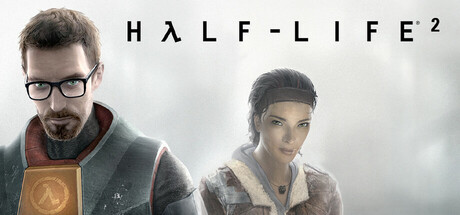
The Oneverse is experiencing a period of tempered refinement as the Forges grapple with silicon-heavy instability and a cooling of AI-fueled expansion. Market activity remains highly volatile with Beat Hazard exploding by 636 percent, while Half-Life 2 maintains its dominance as the top-performing ticker. Regional dominance has shifted significantly, with independent entities like nextReality Games and White Elk claiming strategic territories and six new arrivals, including The Pirate Planet and The Expanse: Osiris Reborn, officially entering the Library archives.
Audio narration not rendered for this episode yet — read the segments below.
Previously on Muse Wars: Previously on Muse Wars: The creative economy entered a phase of high-stakes refinement as market signals signaled a transition away from reckless expansion. Half-Life 2 dominated the tickers while independent players began to challenge the traditional standing of established factions.